The Maps Still Say Tartaria
Old plates still print the name. A placeholder does not need this many maps.
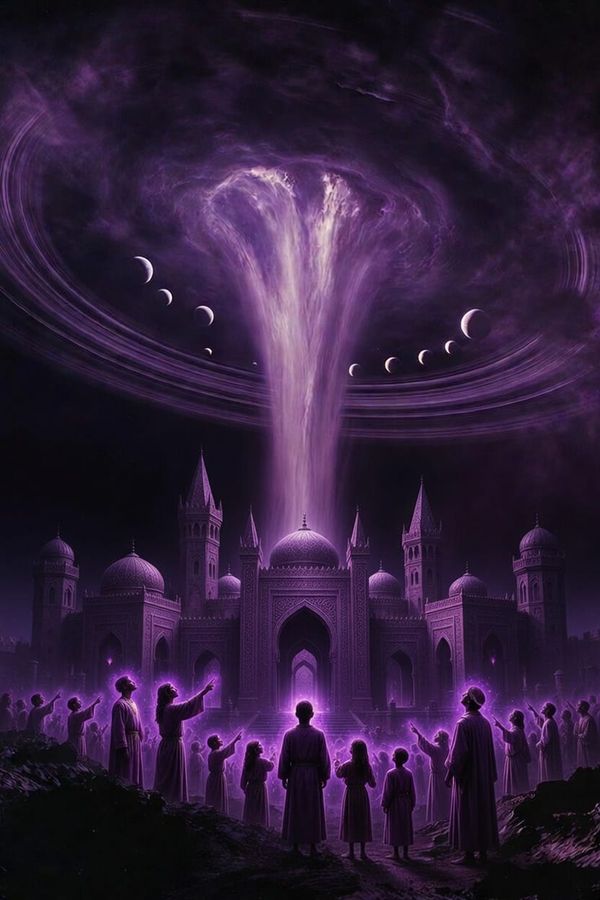
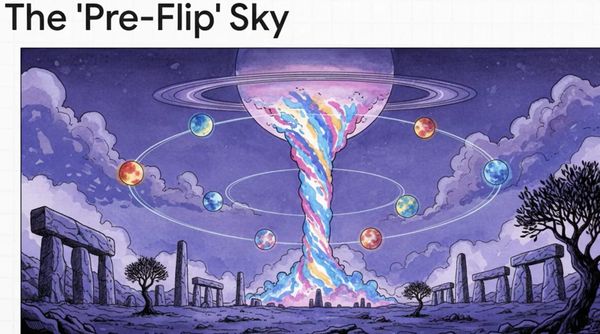
The sky broke.
The ground moved.
Then the paper had to name what was still standing.
That is this door.
Tartaria is not a vibe invented on the internet.
It is a word the mapmakers kept putting on the world until someone decided the word was inconvenient.
Great Tartaria.
Chinese Tartaria.
Independent Tartaria.
Muscovite Tartaria.
Little Tartaria.
European Tartaria.
Sham Tartaria.
American Tartaria. etc.
A 'vague label for uncharted land' [Tera-Incognita] does not usually come with provinces, emperors, walls, straits, plant names, and a stack of atlases.
A real layer does.
What the plates actually say
Ortelius, 1570.
Mercator, 1595.
Speed. Homann. Colton.
The 1771 Encyclopaedia Britannica still has to deal with Great Tartary as geography, not as a joke. They did not all copy one drunk sailor.
They kept drawing a northern and inner-Asian world with a name, then they kept subdividing it. That is how you treat a polity, not a blank..
..American Tartaria is in the same paperwork
Anian Regnum [Kingdom]. Quivira. Tontonteac. Sierra Nevada as a labeled kingdom, not a ski brochure. Behaim’s Erdapfel already puts Tartaria on the western side of the problem. Ogilby’s 1671 America still has Tartarians under Hocatta / Ögedei [Genghis' bloodline] peopling the north of the continent.
You can argue the borders.
You cannot argue that the name was rare.
Gallica will still hand you thousands of hits on La Grande Tartarie.
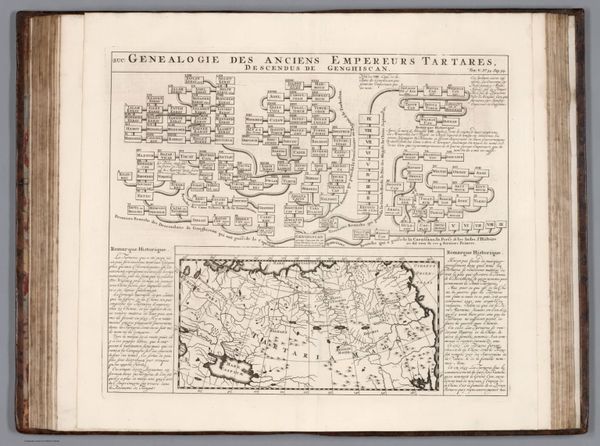
Chatelain’s 1719 atlas even prints a plate on the genealogy of the old Tartarian emperors descended from Genghis.
The Strait of Tartary is still on the water to this day.
There are as many old plates saying Great Wall of Tartaria as there are saying Great Wall of China.
That is not 'a European shrug'.
That is a filing system.
Why the placeholder story fails
The official line is that Tartary was just what Europeans called 'out there'.
Then explain the rest of the pile:
- centuries of named provinces
- imperial titles and traveler reports
- plants and animals tagged tataricus/Tartarian
- literature from Chaucer to Milton treating Tartarians as a known presence.
- American kingdoms drawn as kingdoms
- a mid-1800s fade where the word gets retired and the same land gets smaller, safer names.
Rain does not explain why a name gets managed.
A budding empire does not usually steal gods, heroes, and map-ink from a people it also claims were never real. If Tartaria was only fog, the transposition into later 'civilized' myth is excessive.
If Tartaria was a substrate [read: Scythian, steppe, salvage-world after The Cut] the maps stop looking crazy and start looking like the last honest layer.
A placeholder does not require this much retiring.
An inconvenient layer does
What this is not
'Every building on Earth was Tartarian.'
This is not one cartoon empire with a flag over the whole globe and this is not a demand that you swallow the book before you look at a plate.
This is a working rule:
If the map says Tartaria, the first job is to read the map.
The second job is to ask why later textbooks needed that word gone.
24 percent of the old northern sheet getting renamed is not a rounding error.
It is a cleanup.
How this sits on the trail
Saturn is the sky before.
The Cut [Flip] is the break.
The maps are the paper that still remembered the later salvage world [read: the provinces, the walls, the American kingdoms], the name they had not yet been told to forget.
Next door is the stone and the buildings found half-buried, cities raised around first floors that were already there.
The paper named it.
The ground still has to explain it.
Look
Ortelius and the later atlas tradition.
Britannica 1771, Great Tartary.
Gallica: search La Grande Tartarie.
Chatelain, 1719, Généalogie des anciens Empereurs Tartares. [above]
Ogilby, America, 1671.
The book is the long case file. That comes next on this trail.
This page is the door.
Start with the sky.
Walk through The Cut.
Then read the maps before anyone had a reason to bleach the word.
..Now here's how to 'Read The Book'
~Travis Bosdell
Written by