They Found the Buildings
They did not bury the first floor on purpose. The grade rose. The doors stayed where they were.
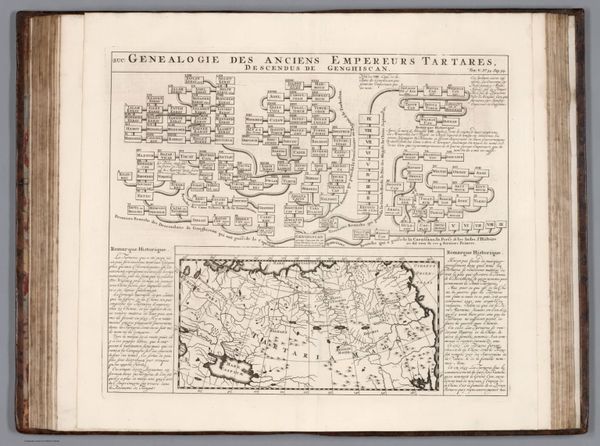
The maps still said Tartaria.
The stone did not wait for permission either.
This door is the ground floor you were told was a basement.
Windows half in dirt.
Original doors below the new steps.
No construction photos of the 'build'
No chimney's on the palace, plenty of chimneys on the later houses.
Bathrooms and sewers installed after the fact, in buildings already standing in towns that barely had a population.
Something is amiss.
Short excerpt from the TartariaLives Audiobook "..No Bathrooms?!"
How they were buried
I am less interested in the slogan 'mudflood' than in the mechanics.
How did the first floor disappear?
Why did it take so long to un-bury one?
In this working model the mud was not a committee project. It was the after-effect of The Cut/Flip:
liquefaction, landslides, surges, and settlement was the apetizer.
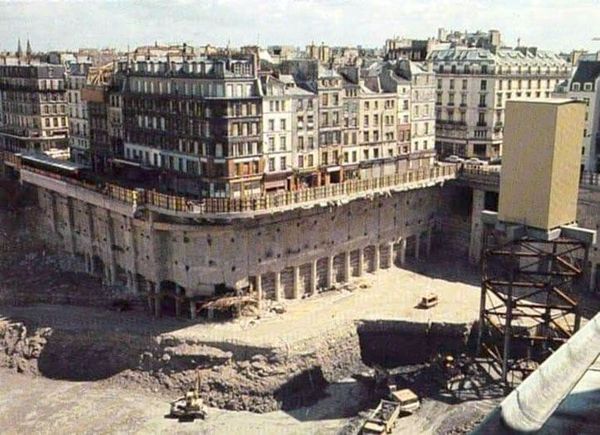
So, the door was at grade until the grade rose. Then a later town grew around a building it did not know how to explain or "maintain" so the paperwork says 'built in 1870' for a hall that already had four stories of windows and a buried entrance.
University Hall, Lincoln, Nebraska. Mid-1800s on paper. Population around 500. First twenty students in 1870. Four stories of windows, the lowest set half in the ground with the original doors. New steps to what used to be the second floor.
They did not dig the first floor out. They built the city around it.
Wills Hall, Minnesota. Same story. Middle of nowhere, half buried, no chimneys, no heating in the original fabric, bathrooms later.
Northampton State Lunatic Asylum, [above audio] 1870 on the plaque, same language of found'ded™ space [read: orphan homes, boys’ schools, statehouses, asylums etc].
That is what you do with a building that is already there and too large for the official town.
Seattle's early 'schools' sit in the same pattern [read: no trains yet, no natural cement story that holds, no trains, no power-tools, cities-gridded-for-millions, harbors/dams/canals, with zero construction photos of a city going up [the largest in the North West],with first floors in the dirt and mud-roads.
The question is not 'pretty buildings'.
The question is, 'who pours a first floor and then invites the earth to swallow it'?
The plumbing problem
Rome, on the official clock, already has toilets and the Cloaca.
Later Europe spends a century on the Big Stink and then crosses the ocean and builds New York as if sewers were optional, until people start dying and the pipes have to go in after the facades.
The Palace of Versailles [above audio] is the first 'wut' moment for a lot of people.
Complete fountains. Water forced uphill. The largest palace in the story. Chamber pots for generations. Kings using the floors.
That is not how you design a working house.
That is how you occupy a machine you did not build and never quite understood.
Same pattern in the American halls with the red brick and natural cement and zero local recipe, rebar before the official invention date, no artisan list, no heating, no chimneys on the monument, chimneys on the later cottages.
If the official century built it, show the build.
If you cannot show the build, you may be looking at salvage.
Star forts and found hardware
Star forts are not a separate hobby. Over 25,000 found so far.
They are the same sentence just in military geometry [read: found'ded™, reused, rebranded]. Crowns copy the outline.
Salvage elites wear the battlement as a hat.
The grid is quieter after The Cut/flip, so the stone still stands and the manual is thinner.
1857, a Tartarian voice writing from an asylum, "..it only took thirty years to undo over eight hundred years of civilization..'
That line is not proof by itself. It is the fictional-mood of a salvage world that still remembered a different-way.
What this is not
This is not 'every courthouse is a spaceship'.
This is not a man-made mudflood as the main event.
This is not free energy hiding in every cornice.
This is a working list:
- first floors at the old grade
- towns with no people to justify the hall
- plumbing and heat added later
- no construction sequenceno
- no power-tools for pre-1895 construction
- the same plan showing up as school, asylum, capitol
- mud and slip as aftermath of The Cut, not as a cartoon reset button
If a building can show its scaffolding, its masons, and its sewers on day one, it can stay in the official century.
If it cannot, it belongs on this trail.
How this sits on the trail
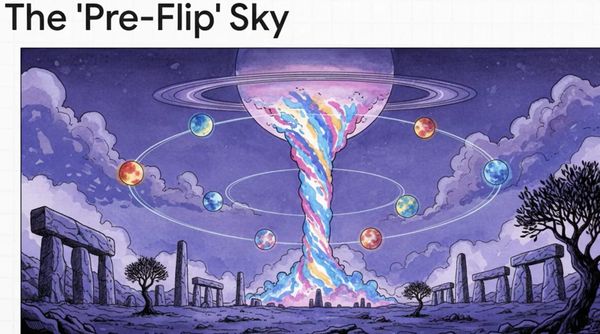
Saturn is the sky before
The Cut/flip is the break.
The maps named the later layer.
These buildings are what the later layer left in the dirt.
Next door is the book.. how to read Tartaria Lives without getting lost in pretty-stone tourism.
Look at the first floor.
Then ask why they never dug it out.
~Travis Bosdell
Written by
What's Next?
How to Read the Book
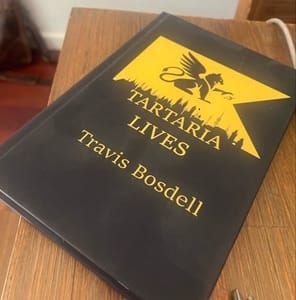
X is the workbench. This site is the library. Tartaria Lives is the case file. Do not start the book in the middle looking for a miracle building. Walk the trail first, then open the long form. What the 1st book is The long argument in one place. Maps. Buried first floors. Chronology that needs extra centuries. American Tartaria. The later salvage world after the sky changed. It is not a church. It is not free energy. It is not the millennial reign with a Tartarian flag on it. The claim