The Sky Before the Flip
Before Tartaria had a name on a map, the sky had a different center.
Before there was an empire on the maps, there was a sky.
That is not poetry.
That is the order of the evidence.
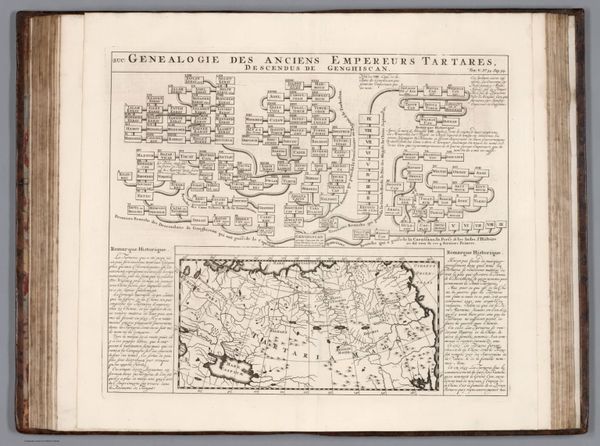
Tartaria is the later layer, with its walls, provinces, buried first floors, names that got rebranded.
The earlier layer is overhead.
If you skip it, Tartaria looks like a random word cartographers forgot to erase. If you start here, Tartaria becomes what it is.. the last large civilization that still remembered the world before the lights changed.
The old world did not start with our present sun sitting quietly in the middle of empty black. The oldest reliefs, hymns, books, scrolls, and temple programs keep repeating the same heaven.
Not twelve constellations wheeling for farmers. Not a yellow coin crossing a blue dome.
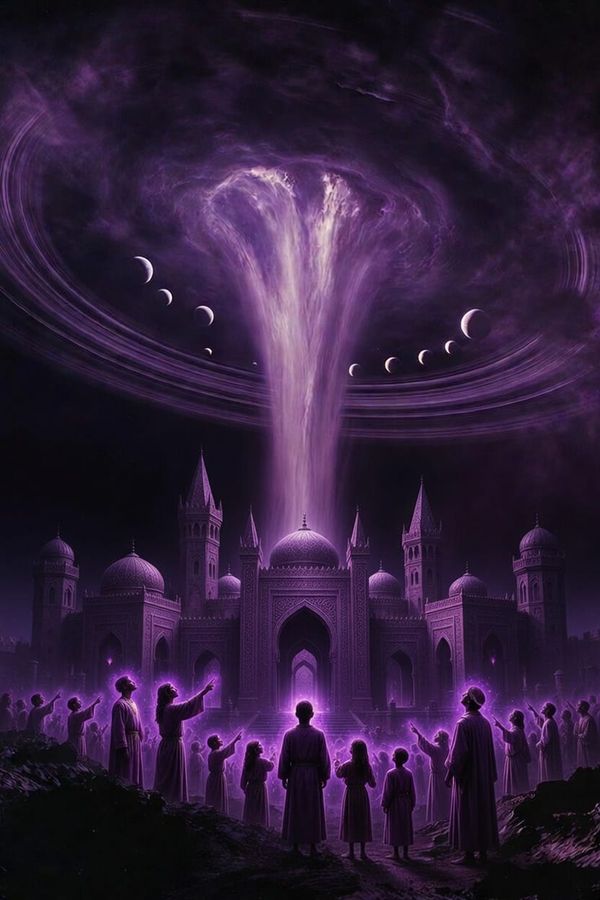
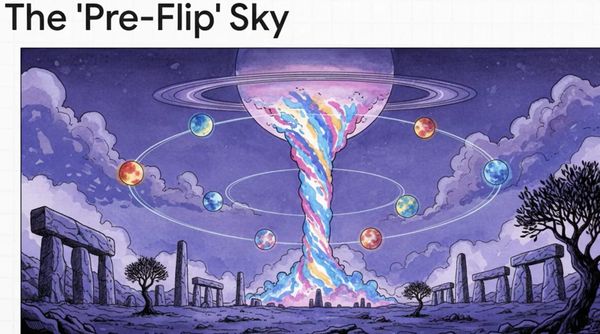
A center. A disc that does not travel. A column that stands. Companions that sit in a ring instead of wandering free. Night that is not our night. Time that is not our week.
That is the sky before the flip.
Full room: Where this splits
What they were looking at
Across the first written cultures the "heavens" are not scenery. They are a machine with a sovereign at the pole. A dark or veiled sun that does not rise and set like ours.
A ladder, pillar, tree, or djed holding the worlds together.
Six or seven lights in attendance [later called planets, gods, archangels, churches, lamps]. The famed '7-Wanderers'.
A crescent that is not yet required to be our sun. She was still the 'Dark-Eye' behind the sheath.
Animals and winged forms that are not zoo drawings. They are the shapes a current makes when it pinches and folds.
You can argue names. You cannot argue the repetition. The same kit keeps showing up because they were looking at the same phenom.
Full room: Sky fossils
The Tartar-Sauce™
The names of Saturn
Across many ancient cultures, there exists a remarkably consistent memory of a great cosmic war or celestial upheaval that ended an older planetary order.
Among the Canaanites and early Semitic peoples, El [Saturn] features in primordial battles against younger, rising gods.
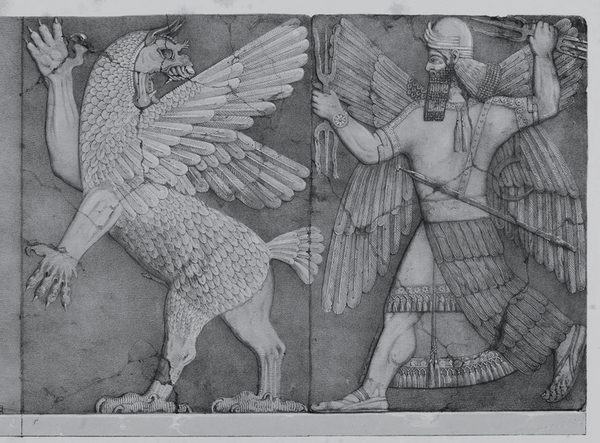
Sumerian, Tartarian, and Babylonian records describe cosmic struggles between the old high god Anu and ascending powers, most famously in the Enuma Elish.
Similar themes of an ancient sky ruler being displaced through celestial conflict appear in Hittite mythology with Kumarbi [a Saturn equivalent] and are remembered faintly in certain Egyptian and Mesoamerican traditions of sky gods and cataclysmic upheavals.
These widespread accounts [using different names but describing the same essential event] point to a shared ancestral memory of a major planetary reconfiguration rather than independent myths invented in isolation.
When dozens of completely separate cultures [from the 'Country-Between-Two-Rivers {Mesopotamia} to India, Mediterranean, Anatolia, and the Americas], independently preserve the exact same core narrative of an old stationary sky god being violently displaced by a new solar order, it is no longer reasonable to call it coincidence or 'primitive imagination'.
It is the shared ancestral memory of a real planetary reconfiguration that ended the Saturn configuration and birthed our current world.
Dismissing this pattern as mere 'primitive imagination' doesn't make the evidence go away...
...it only reveals how far modern gatekeeping has drifted from honest inquiry.
In Greek tradition, the 'Cosmic-War' appears as the Titanomachy [the war in which Kronos {Saturn} and the Titans were overthrown by Zeus and the new Olympian order.
~El / Kronos / Saturn
The elder sovereign, the bound king, the one who rules an age and is then overthrown.
So why did the people who took advantage of an "De-throwned" Saturn, plant a giant Saturn disc on the exact mountain where Zeus was born to celebrate his victory?
Wut?!
— Tartaria (@TartariaLives) June 16, 2026
Across many ancient cultures, there exists a remarkably consistent memory of a great cosmic war or celestial upheaval that ended an older planetary order.
In Greek tradition, it appears as the Titanomachy [the war in which Kronos {Saturn} and the Titans were overthrown… https://t.co/MWbWsh7ZIg pic.twitter.com/iMkgr3TC5t
~Shamash
later filed as 'the Sun' but first the judging light of the enclosure, the eye that sees because it does not leave.
Now universally known as the bright Sun god of 'The Country Between Two Rivers' [Mesopotamia], and was in some older Babylonian astronomical texts and referred to as the 'night sun' or 'black sun'
These are titles that don't fit a normal daytime sun.
"By the word 'sun' we must understand the 'star of the sun', i.e. Saturn".
This pattern repeats across multiple cultures where an older, often stationary sky deity is eventually overshadowed, reinterpreted, or replaced by gods tied to a bright, moving sun.
~Osiris / the dead-and-returning king
The dark sovereign under the floor of the new world.
Egypt gives us one of the clearest examples of this shift as well.
In the oldest layers, Osiris [Usir] appears as an ancient high god associated with a former cosmic order [read: a ruler who is killed and dismembered], then resurrected. His story carries strong memories of an older, stationary sky that was violently disrupted.
His son Horus then rises as the living falcon-headed king who defeats chaos and claims the throne. Over time, Horus becomes strongly solar [Ra-Horakhty stands for 'Horus of the Horizon'], fully aligned with the bright, moving Sun.
OK.. My turn..
— Tartaria (@TartariaLives) December 20, 2025
This pectoral [Tutankhamun's treasure, 1323 "bce"] is one of the clearest pre-flip memories in Egyptian art. [see: pic-2 Horus/Saturn]
Look at the top medallion, zoomed in on the detail.
The three figures [pic-2] are the king flanked by Thoth [ibis-headed… pic.twitter.com/TsJkOGwtmS
This father-to-son handover is not just family drama. It is a mythic record of the old sky order giving way to the new solar order.
Osiris = memory of the former stationary age.
Horus = the new reality under the daily-rising Sun.
The pattern holds across cultures, where the old god is displaced, and the new solar heir takes his place.
Why would so many ancient civilizations show this same shift in their most important sky gods?
It suggests to me that at some point in deep antiquity, the dominant sky changed dramatically. The old order [whatever it was] ended, and a new solar reality took its place.
The gods didn't just evolve in stories…
..something in the actual sky appears to have changed, and the myths were adjusted to match the new world and the original meanings didn't disappear completely..
..it would seem they were simply overwritten.
~Ahura Mazda / Zeus Oromasdes
later solarized, earlier the high good light of an ordered sky.
Hmmm, let me take a crack at this.
— Tartaria (@TartariaLives) February 1, 2026
This one actually made the real Rosetta Stone decipherable.
It is often called the 'Rosetta Stone of cuneiform' because the multilingual text [read: Old Persian, Elamite, Babylonian] unlocked ancient Mesopotamian scripts in the 19th c.… pic.twitter.com/5Qwg4lRxMA
~Shani
The slow, heavy, fateful planet of the Hindu lists. In the Hindu tradition, Shani is explicitly the Saturn god. The texts speak of planetary conflicts involving Shani [Saturn] and major cosmic realignments.
The same office in another language.
"Raviputram Yamaagrajam" = "Child of the Sun, elder brother of Yama"
Saturn as the firstborn "son" of the distant Sun [Ravi], predating death itself [read: Yama = god of death, introduced post-cataclysm]
Saturn was the local primary during the lock, the "father" of the Golden Age before Sol’s unmasking made it the "prodigal child" returning to claim the throne.
~"Chaaya maartaanda Sambhoodham" = "Born out of the fusion between Chaaya the shadow and the Sun"
This is the Sanskrit smoking gun I've been looking for.
— Tartaria (@TartariaLives) November 30, 2025
This shloka from the Shani Stotra [a hymn to Shani/Saturn] is a direct eyewitness snapshot of the Saturnian enclosure, compressed into verse and veiled as 'myth'
~~~~~~~~~~~
👇
"Neelanjana Shaama Bhaasam..
Raviputram… pic.twitter.com/RCugjQ0COl
These are not proof that "Saturn is God". They are proof that one office kept getting renamed after the office was empty. When the body left the pole, the name stayed on the paperwork.
In the Mesopotamian cut we already walked:
Shamash as the radiating disc.
Ishtar as the eight-pointed star.
Nanna / Sin as the crescent [read: Dark-Eye].
That is not three separate "planets" invented by primitives who could not tell rocks from gods. That is a remembered sky written down after the configuration broke.
Saturn is the name this work uses for the old fixed light.
Not the cold ringed ball in today's charts.
The body that sat locked in the north of the old sky and behaved like a sun because, from the ground, that is what it was.
Why the symbols will not die
You do not need a priesthood to keep a sky.
You need stone. Eight-pointed stars. Radiating discs.
Crescents parked behind a sheath.
Seven lights.
A column.
A dawn that is not our dawn.
They keep showing up because the event was bigger than the cultures that inherited the wreckage.
Egypt, The Country Between Two Rivers [Mesopotamia], the steppe, and later Tartaria are different names, same overhead memory.
That is why this site starts here.
The maps come second. The buildings come second.
The sky is the reason those maps and buildings exist in the form they do.
A disc over a pillar. A star in a circle. A crescent under a lamp. Seven branches. A tree tended by winged sages. Griffins on a gate. A wreath. A ladder of stone.
They will not die because they were never fashion.
They were field notes. After the lock was cut, people could not raise the current again, so they cut the current into jewelry, capitals, windows, and lamps.
Every later religion inherited the clip-art of a sky that had already failed. That is why the same marks walk out of Sumer, walk into churches, and still sit on coins. The symbol outlived the object.
What this is not
This is not 'Saturn is God'.
That is the smear-campaign that turned a polar body into a devil after the light changed. "We will take the gods of old, and make them the devil of the new."
This is not free energy. This is not the millennial reign dressed in plasma.
This is a working model where the old sky had a different center.
The record of that center is in myth, temple orientation, and repeating glyphs.
Then something cut the connection.
After the cut, people rebuilt on the ground and called the surviving order by many names.
One of the large surviving names is Tartaria.
If a piece cannot be tied to a map, a relief, a hymn, an alignment, or a physical remainder, it does not get to sit in this library as fact.
It can sit as a question. That is the rule.
Two doors, one house
You can enter through the cities with its star forts, half-buried halls, maps that still say Tartaria.
You will still meet the sky.
You can enter through the sky with its disc-lore, the star, the crescent, the column. The Seven-Wanderers.
You will still meet the cities.
Saturn is the sky before.
The reset is the cut/flip.
Tartaria is what was still standing when the new story started getting written.
Next
The next door on the trail is The Cut/flip
The moment the locked failed, and the ground had to explain a missing sky.
Until that page is up, use this as the first stone..
..The old world remembered a different arrangement overhead. The gods on the reliefs are that arrangement, written after the lights changed.
Start with the sky.
Then look at what survived on the ground.
~Travis Bosdell
.
Written by
What's Next?
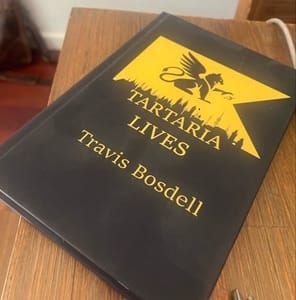
How to Read the Book
X is the workbench. This site is the library. Tartaria Lives is the case file. Do not start the book in the middle looking for a miracle building. Walk the trail first, then open the long form. What the 1st book is The long argument in one place. Maps. Buried first floors. Chronology that needs extra centuries. American Tartaria. The later salvage world after the sky changed. It is not a church. It is not free energy. It is not the millennial reign with a Tartarian flag on it. The claim